


Masseter Muscle Relaxant Treatments in Glen Iris
Dr Jaclyn Wong’s dual qualification in medicine and dentistry gives her a thorough understanding of the masseter muscle, both its therapeutic role and its influence on the shape and structure of the face.
Jaw tension, habitual clenching and changes to the shape of the lower face are concerns that often occur together. The masseter muscle- responsible for chewing and situated at the angle of the jaw – can become enlarged through repeated clenching or grinding, contributing to discomfort and changes in the lower facial contour.
For patients dealing with jaw pain, headaches, or the effects of bruxism, masseter muscle relaxant treatment may help reduce the intensity of muscle activity associated with these concerns. Those interested in jawline slimming or a more defined lower face may also find it appropriate as part of a broader facial treatment plan. If either concern resonates, contact the clinic to arrange a consultation with Dr Jaclyn.
How Masseter Muscle Relaxant Treatment works
A muscle relaxant injection is administered directly into the masseter muscle on each side of the jaw. The relaxant works by temporarily blocking the signal that causes the muscle to contract, which reduces the force with which it operates and, over time, allows the muscle to reduce in size.
The process of reducing the masseter muscle is gradual. The injection itself takes only a few minutes, but the full effect develops over several weeks as the muscle responds to the reduced activity. The treatment is temporary, with effects typically lasting between three and four months before a follow-up treatment may be considered.
Therapeutic uses
The masseter muscle is one of the strongest in the body. When it becomes overactive through habitual clenching or grinding (often done subconsciously during sleep), the consequences can extend well beyond the jaw itself. Patients may experience jaw pain, headaches, facial tension, and strain on the temporomandibular joint (TMJ).
For these patients, jawline and masseter muscle treatment using a muscle relaxant can provide relief by reducing the intensity of the muscle’s activity.
Cosmetic uses
For patients who are interested in jawline slimming and masseter reduction for cosmetic reasons, relaxing the masseter allows the muscle to reduce in size over time, which can soften the angle of the jaw and create a more defined lower facial contour.
This masseter slimming effect is a secondary consequence of the muscle relaxant, not a direct sculpting technique.
All cosmetic and surgical procedures carry some degree of risks, limitations and require appropriate aftercare to support healing and long-term outcomes. An in-person consultation is necessary to assess circumstances and options tailored to you. General risks and considerations associated with cosmetic and surgical procedures offered at Dr Jaclyn Wong's clinic can be found here.
What to Expect at Your Masseter Muscle Relaxant Treatment Appointment

The treatment
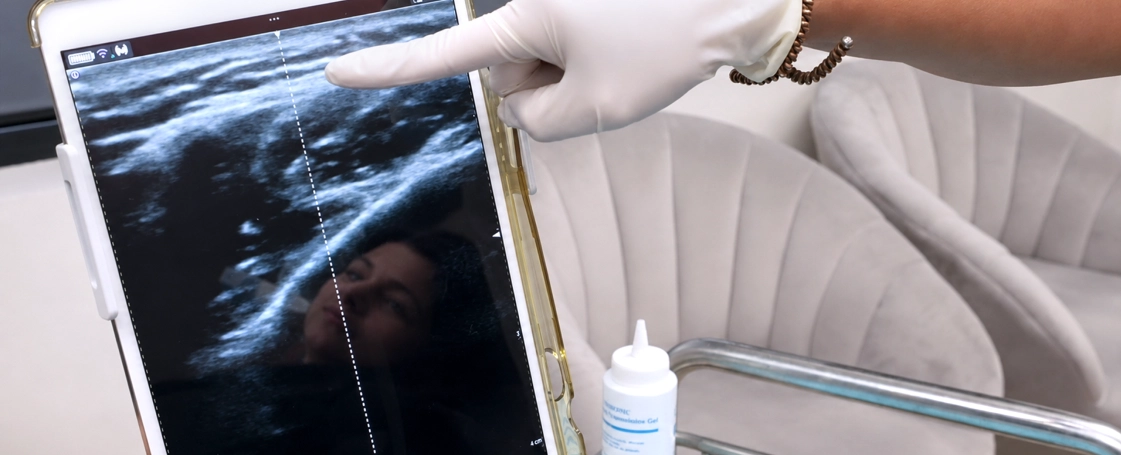
Masseter muscle relaxant injections are administered at the clinic. The procedure takes a short time and doesn’t require general anaesthetic. Dr Jaclyn will mark the injection sites through an ultrasound guided procedure for preciseness and administer the muscle relaxant to each side of the jaw.

Onset and Duration
The effect of the treatment develops gradually over the weeks following the injection as the muscle responds to the reduced stimulation. The full effect is typically apparent at around the four-week mark. Effects last between three and four months on average, after which a follow-up appointment may be appropriate depending on the patient’s goals.

After the Treatment
Patients can return to normal activities following the appointment.

The Anatomy Behind the Approach
As a practitioner with both a medical and dental degree, Dr Jaclyn brings a clinical understanding of the jaw, the TMJ, and the surrounding musculature to masseter treatment that informs both how she assesses the muscle and how she approaches the injection.
For patients seeking cosmetic jawline treatment, Dr Jaclyn will discuss what the treatment involves and what’s realistic for their individual anatomy before making any recommendation. Treatment is only offered where Dr Jaclyn considers it clinically appropriate.
A muscle relaxant is injected into the masseter muscle on each side of the jaw. This temporarily reduces the muscle's activity, which can relieve symptoms associated with jaw clenching and grinding, and over time may allow the muscle to reduce in size. The procedure does not require general anaesthetic.
Effects typically last between three and four months. Duration varies depending on the individual, the site injected, and how active the muscle is in daily use. A follow-up treatment is generally considered when muscle activity begins to return.
The injections involve minor discomfort, as with any injection into a muscle. A topical numbing cream can be applied beforehand, and the procedure itself is brief.
The effect is not immediate. It develops gradually over the weeks following treatment as the muscle responds to reduced stimulation, with the full effect generally apparent at around four weeks.
Masseter muscle relaxant treatment may help reduce the intensity of jaw muscle activity associated with habitual clenching and grinding, which can contribute to jaw pain, headaches, and strain on the temporomandibular joint (TMJ). Suitability depends on the individual's symptoms and medical history.
Most patients who choose to maintain the treatment do so every three to four months, as this is typically when muscle activity begins to return. The appropriate frequency depends on the individual and their goals.
Book a Consultation

A consultation with Dr Jaclyn Wong is a conversation, not a commitment. Get in touch with the clinic to arrange a time.